Small Town Canada Spotlight: L’Anse aux Meadows National Historic Site
In the latest edition of Small Town Canada Spotlight, we’ll be taking a look at the long history of L’Anse aux Meadows National Historic Site, located on Newfoundland’s northern peninsula. This archaeological site dates back 1,000 years to when it was used as a Norse settlement.
Before the Norse arrived in Newfoundland and Labrador, five Indigenous groups made the site of L’Anse aux Meadows their home, the oldest of which dates back to roughly 6,000 years ago. The most prominent Indigenous group to occupy L’Anse aux Meadows were the Dorset people, who lived at the site around 300 years before the Norse. The estimated radiocarbon date ranges for the other groups are c. 4000 – c. 1000 BCE for the Maritime Archaic tradition, c. 1000 – c. 500 BCE for the Groswater tradition, c. 400 – c. 750 for the Middle Dorset, c. 800 – c. 850 for the Cow Head Group and Beaches traditions, and c. 1200 – c. 1500 CE (after the Norse) for the Little Passage tradition. None of these groups lived there during the Norse occupation.
The site at L’Anse aux Meadows served as an exploration base and a way to bring desirable goods like lumber, furs, and luxury foods like walnuts and grapes back home. The Norse were interested in the Strait of Belle Isle strictly as a navigation route. Barns and other livestock structures normally found at settlement sites were missing, and no evidence of animals grazing was found. Researchers determined that far more sheltered coves were likely used as more permanent settlements.
Norse Discoveries
Among the artifacts discovered at the site were three butternuts and butternut wood. Since butternut trees are not found beyond eastern New Brunswick, the Norse must have explored the Gulf of St. Lawrence and surrounding areas to find these species. Butternuts also grow in the same areas as wild grapes and ripen around the same time in late summer. This discovery was noteworthy to the Norse, who named the entire area Vinland (Land of the Wine).
The original name for L’Anse aux Meadows was actually L’Anse à la Médée (Meada’s Cove) and appeared on a map as early as 1862. The area was likely named after a ship called Medée that belonged to the French fishing station located there from the 1700s until 1904. The French fishermen later changed the name to L’Anse aux Méduses, meaning “Jellyfish Cove.” The site’s modern name is an English corruption of the French name, from Méduses to Meadows, which can also be translated as “Grassland Bay” or “the bay with the grasslands,” referring to the open landscape around the cove.
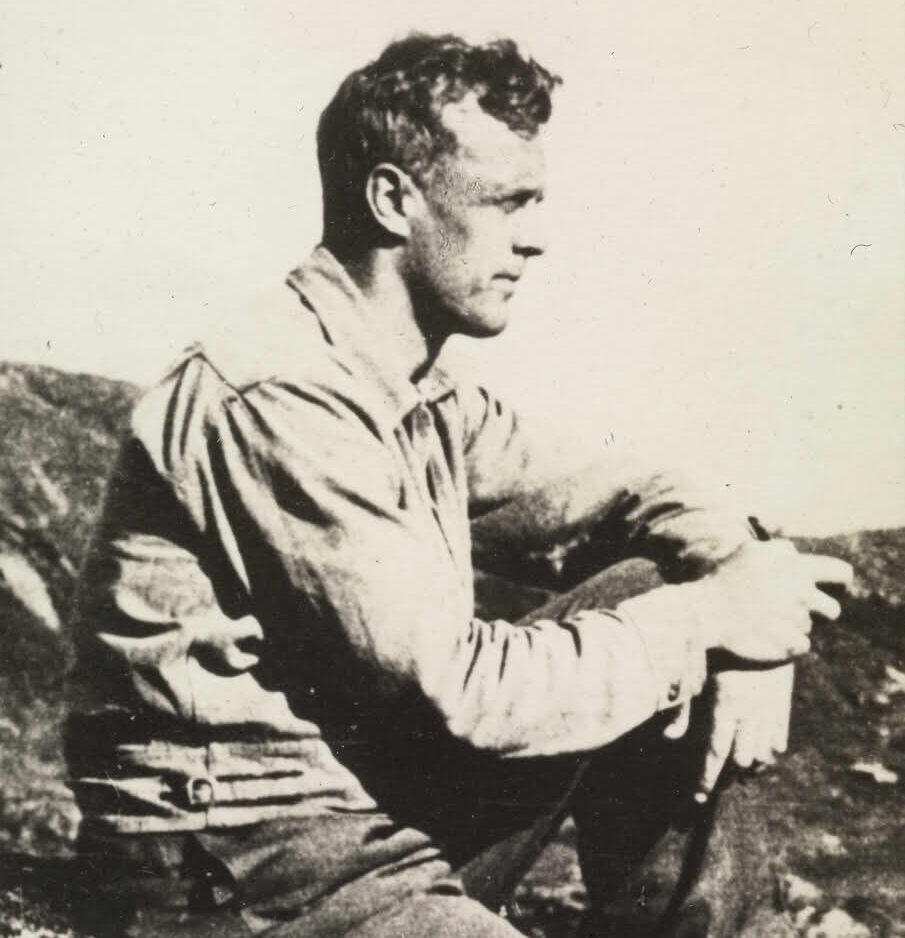
Norwegian explorer and writer Helge Ingstad discovered L’Anse aux Meadows in 1960. Ingstad was researching Norse landing places along the coast of New England and other northern locations. When he came across L’Anse aux Meadows, local resident George Decker led him to several overgrown bumps and ridges that looked like building remains from a settlement.
This proved to be true, but it was also all that was left of the former colony. Over the next eight years, Helge and his wife, archaeologist Anne Stine Ingstad, assembled an international team of archaeologists from Norway, Iceland, Sweden, and the United States to excavate the site.
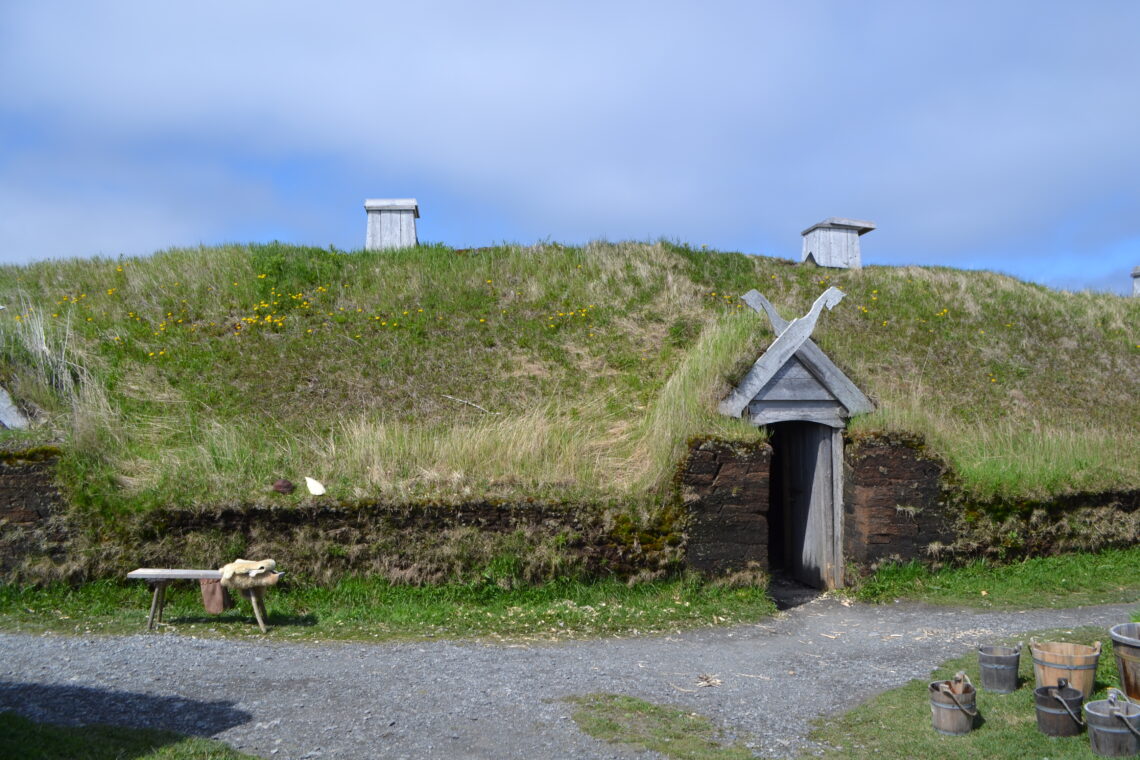
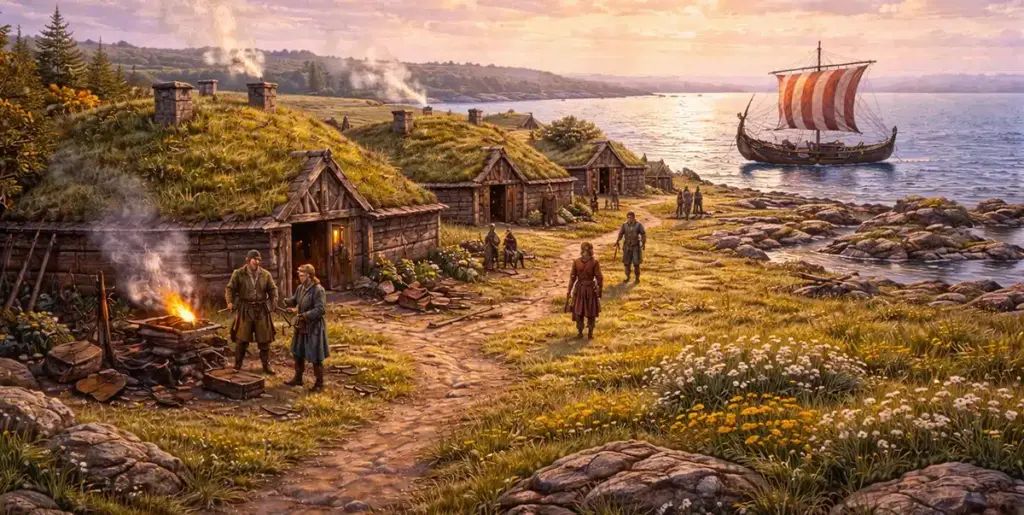
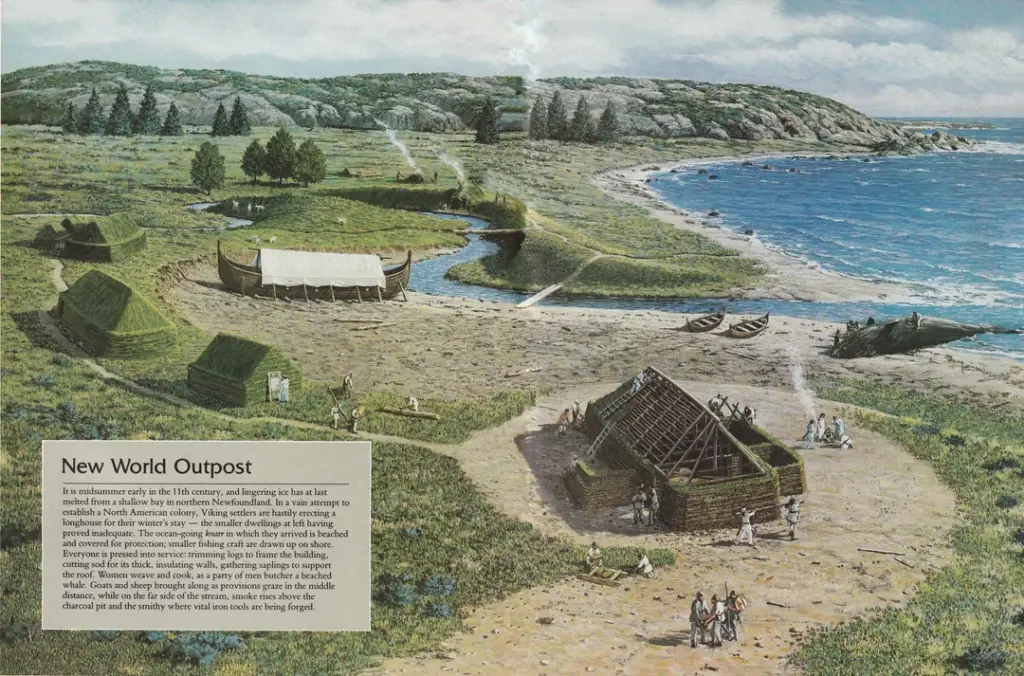
During this time, the Ingstads discovered that the overgrown ridges and bumps were the lower courses of the walls of eight 11th-century Norse buildings. The buildings were similar to those found in Iceland and Greenland just before and after the year 1000, with walls and roofs made of sod and laid over a supporting frame. Long, narrow fireplaces were also prominent and located in the middle of the floor to provide heat, light, and a cooking source.
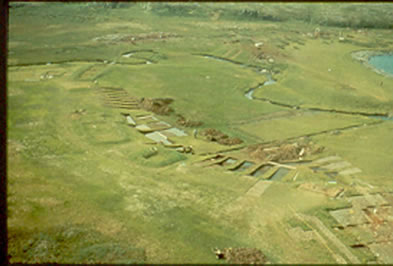
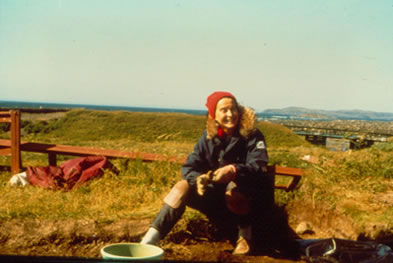
Throughout the excavation, researchers also unearthed several artifacts similar to those found in Iceland and Greenland. These discoveries ranged from a bronze ring-headed pin that Norsemen used to fasten their cloaks, to a cooking pit, a bone needle believed to be used for knitting located in a fire pit and a stone oil lamp and small spindle whorl found inside another building. Since the excavation began, researchers have unearthed over 800 Norse objects.
These artifacts also helped researchers determine that not all the Norse settlers at L’Anse aux Meadows were men. Spindle whorls and knitting needles were tools used by women. Slag from smelting and working iron was also found on the site, along with a number of iron boat nails or rivets. This, more than any other find, led archaeologists to identify the site as Norse.
After the Ingstad’s archaeological dig ended in 1968, the federal government named L’Anse aux Meadows a National Historic Site of Canada. Parks Canada has since managed the site and conducted two other excavations after the initial dig: one under the direction of Bengt Schönbäck from 1973 to 1975 and one led by Birgitta Wallace in 1976. Following these digs, the site was reburied to protect and conserve the cultural resources. L’Anse aux Meadows was also declared a UNESCO World Heritage Site in 1978.
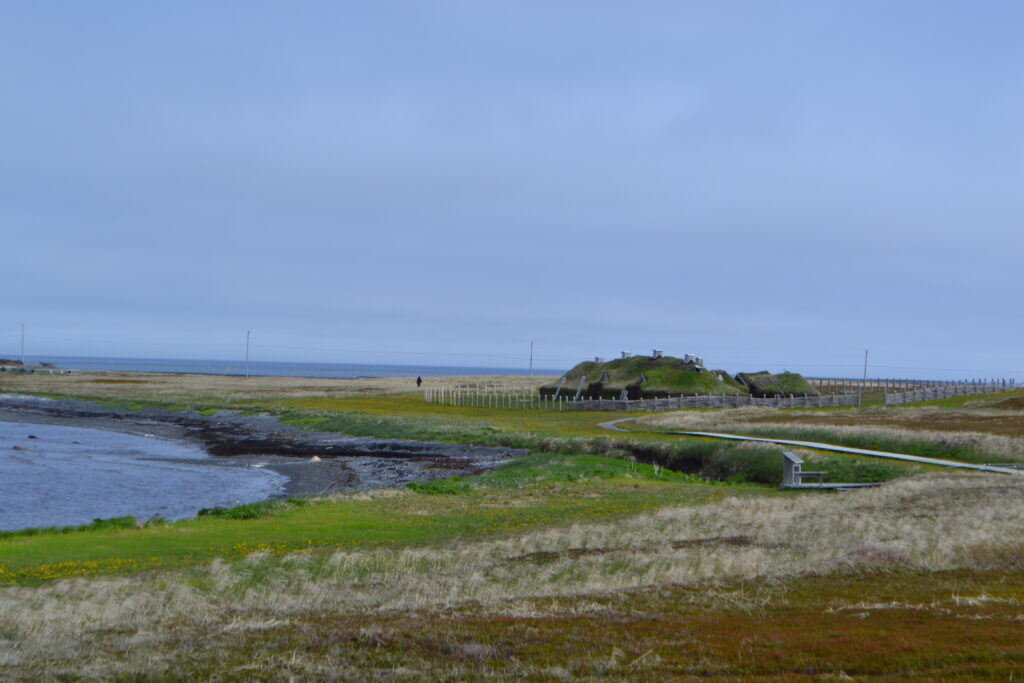
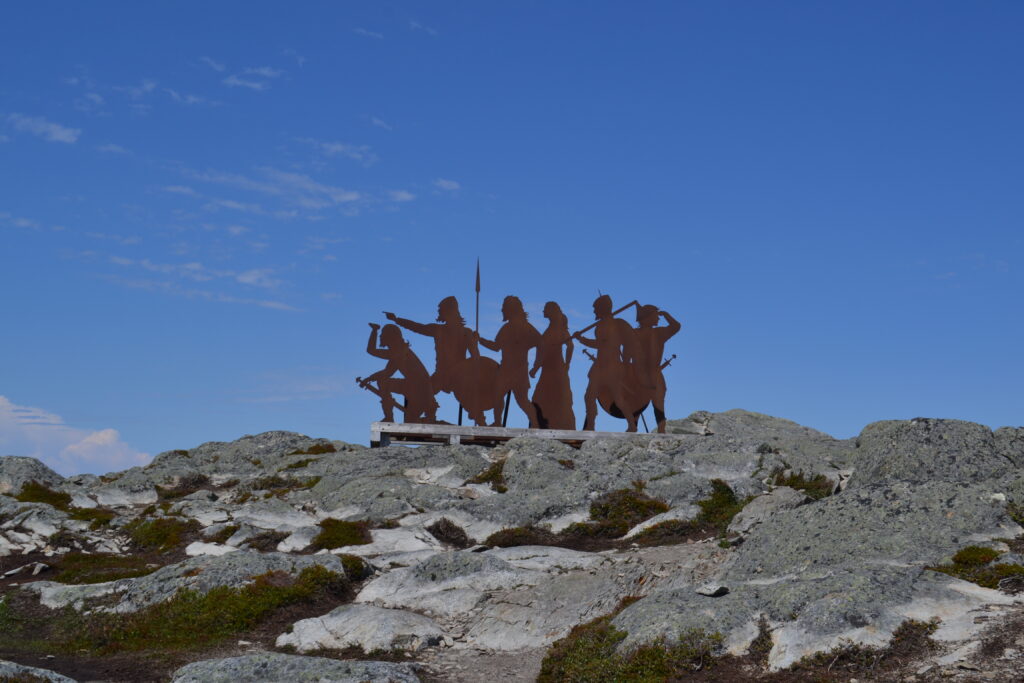
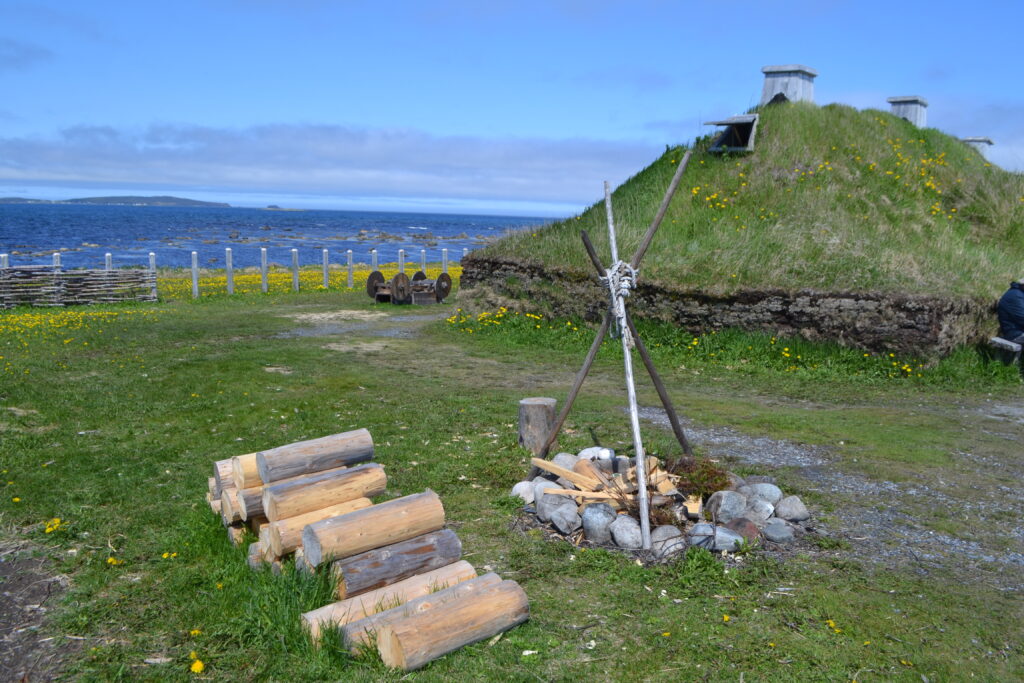
L’Anse aux Meadows is the only confirmed Norse site in North America outside of Greenland. It also represents the farthest known extent of European exploration and settlement of the New World before Christopher Columbus nearly 500 years later.
L’Anse aux Meadows National Historic Site Today
Today, L’Anse aux Meadows is home to an informative visitor centre with exhibits of the site and its artifacts. Guided tours of the three replica dwellings, built away from the original settlement, are offered. It remains a popular tourist destination, receiving over 30,000 visitors per year.
The modern village of L’Anse aux Meadows was established by William Decker around 1835. Located one kilometre from the archaeological site, the village grew to around 15 families, each involved in the inshore fishery. As the fishery declined and people moved away, tourism associated with the archaeological site became a welcome addition to the economy.
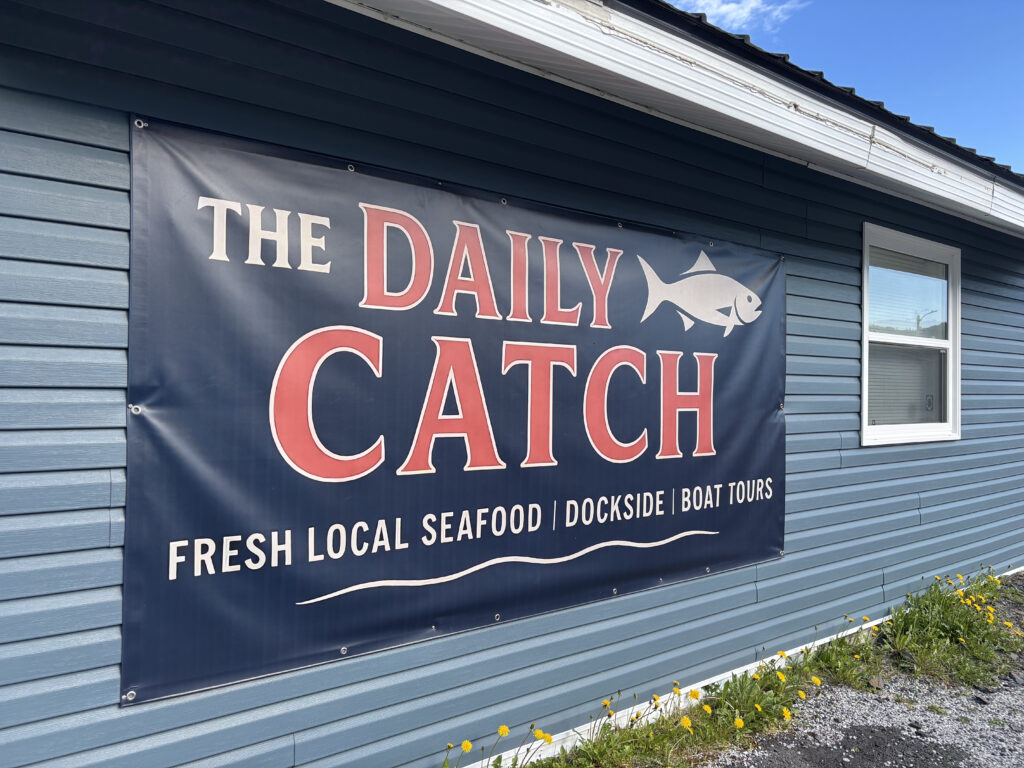
Viking Village Bed and Breakfast, purchased by Terry Hedderson in 2018, offers a cozy retreat with breathtaking views of Hay Cove and a full hot breakfast included with your stay. Hedderson also founded the Daily Catch Restaurant in 2003, which continues to serve delicious seafood dishes today.
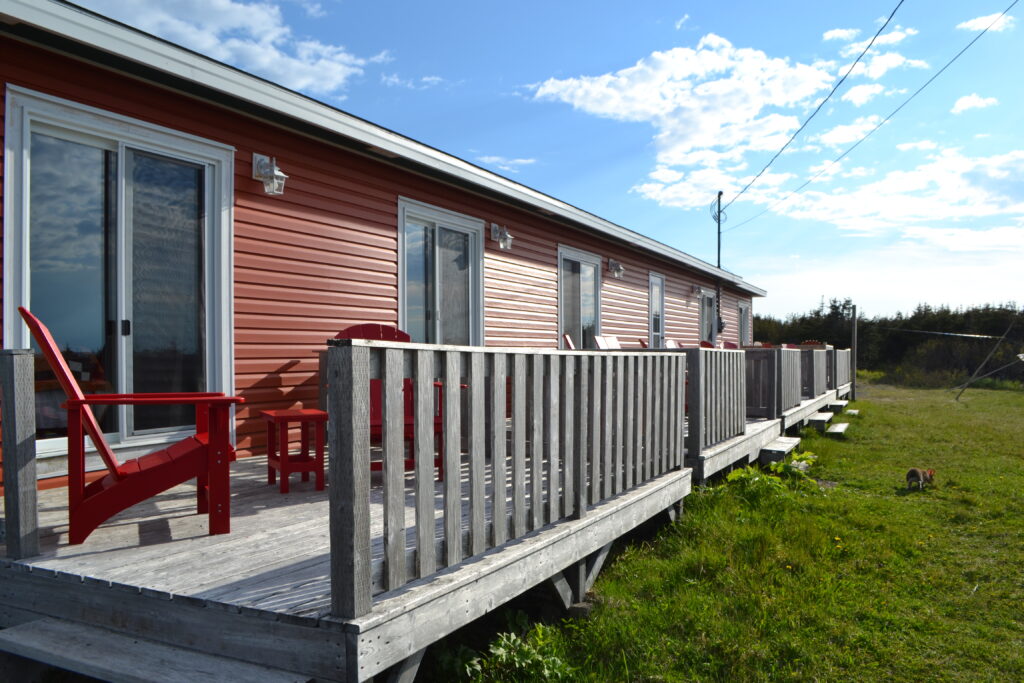
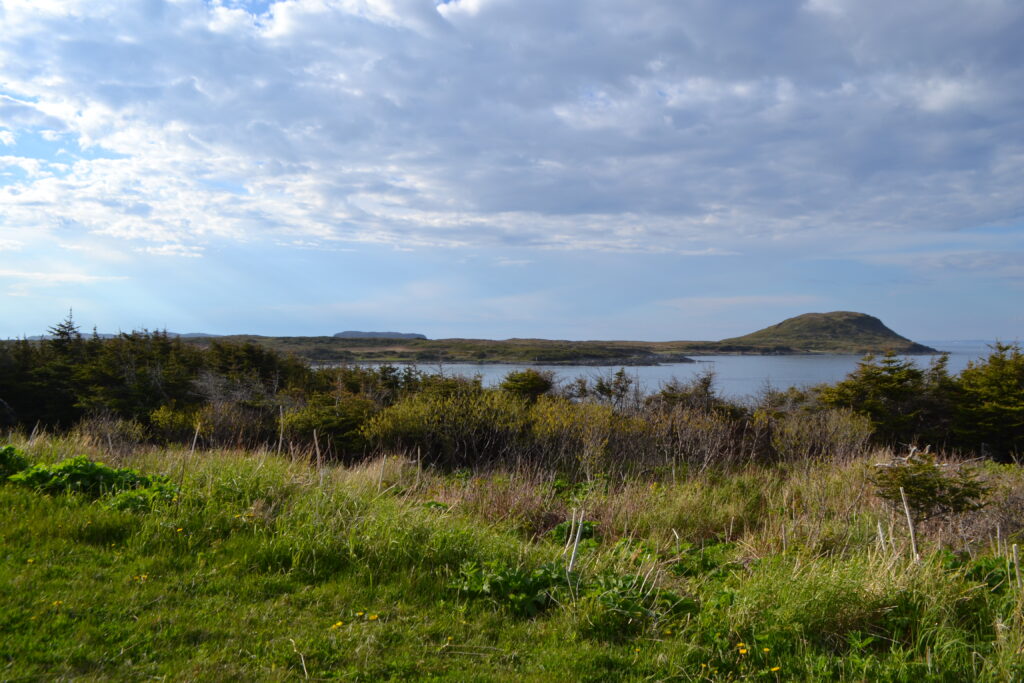
The story of L’Anse aux Meadows stands as a remarkable testament to human exploration and adaptability. This unique site not only confirms the presence of Norse explorers in North America centuries before Columbus, but also provides a vivid look into an era defined by daring voyages and cultural encounters.
A big thank you to Terry Hedderson from Viking Village Bed and Breakfast for the stay.

You May Also Like
Small Town Canada Spotlight: The Tip to Tip Trail of Burritts Rapids, Ontario

Small Town Canada Spotlight: The LaHave Light Station
